
10 Toxic Towns You Still Can’t Live In
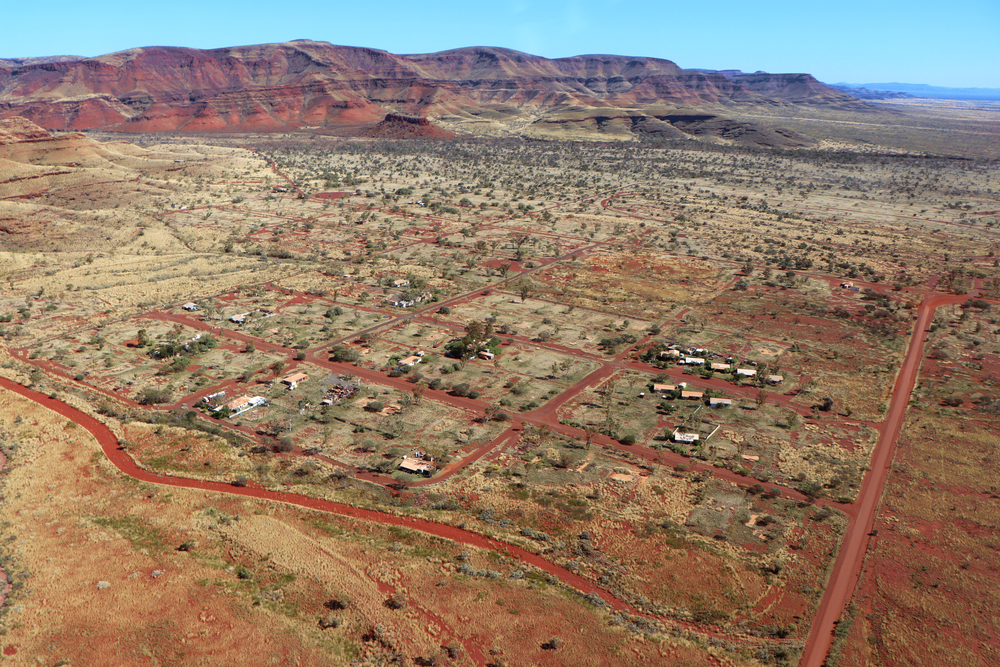
Wittenoom, Pilbara, Australia
The company town of Wittenoom in Western Australia’s Pilbara region had a population of around 20,000 in the early 1960s, when the bustling spot was home to a cinema, two schools and a swish hotel, which is pictured here. The town owed its existence to a nearby blue asbestos mine that employed most of the adult residents.
As health concerns surrounding asbestos grew, the mine was shut down in 1966, but the closure came too late for many of the town’s residents.
To date, more than 2,000 people have died from asbestos-related diseases, according to the Asbestos Diseases Society of Australia, while the mine’s ex-workers are at risk of dying prematurely from asbestosis, lung cancer or mesothelioma.
Despite its deadly terrain, the town’s closure wasn’t announced until the late 1970s, when the State Government started buying up and demolishing properties. During the 1980s and early 1990s, the bulk of the town’s structures were pulled down, and the hotel was finally bulldozed in 1996.
Regarded as the most contaminated site in the southern hemisphere, Wittenoom, which has been dubbed ‘Australia’s Chernobyl’, was wiped off official maps and disconnected from the power grid in 2007. Three die-hard permanent residents still live in the former town, but the Western Australian government introduced a bill in March that will allow for the compulsory purchase of their properties, forcing them out for good.
Many more of towns like these will probably be seen in the future.